“Are you even relevant anymore?” Nina Simon, former executive director of the Santa Cruz Museum of Art & History and the author of The Art of Relevance, revealed the challenge in which museums and institutions need to reassess and “mak[e] connections that unlock meaning” in cultivating inclusive community engagement (Simon, 2016). The question highlights an important cultural shift of museums and institutions to embrace polyvocality; leverage diverse perspectives as part of a dynamic exchange in strengthening meaningful experiences. The experiences within museums and institutions have the potential to empower and bridge authentic and sustainable connections with its community. As a designer at The Design Minds, Inc., a content-based exhibit design firm, I strive to develop experiences that highlight the visitor experience to foster meaningful and inclusive exhibitions. In this article, I plan to discuss the commitment to engagement and effective dialogue through the role of evaluation in exhibition design and development. Secondly, I seek the collaborative interchange of best practices in the field to learn and adapt to the changing landscape of our museums and institutions. Furthermore, I will share my hopes for the future in pursuit of designing receptive experiences to transform and encourage action.
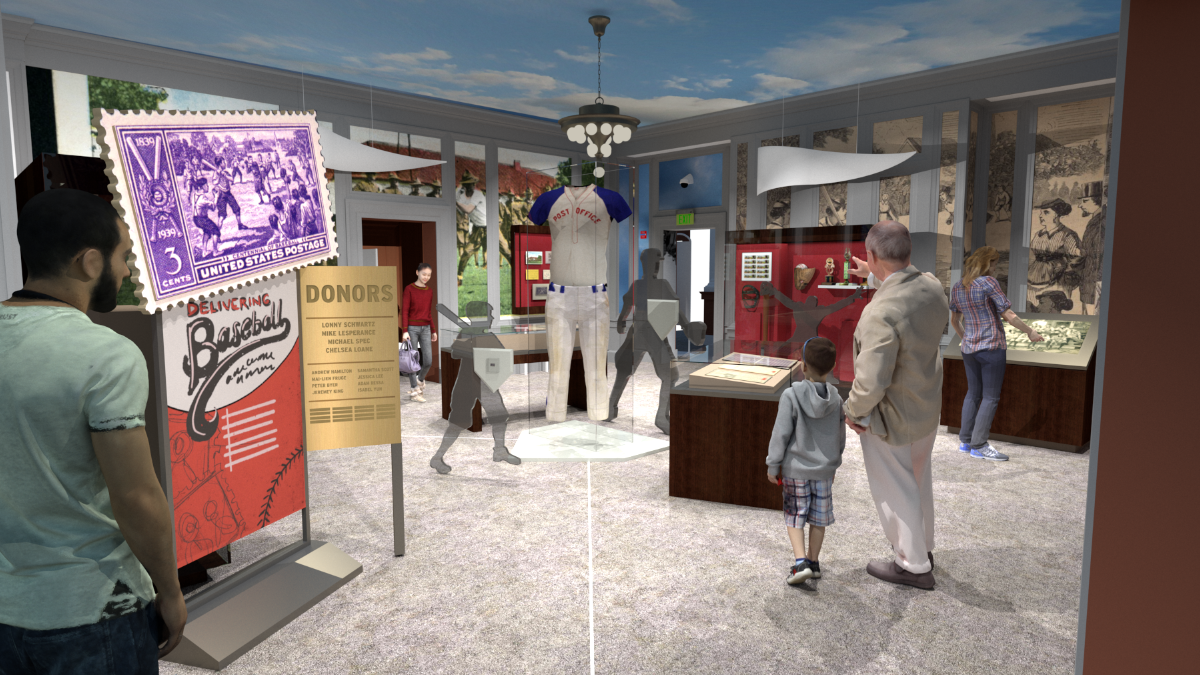
Audience research and evaluations provide an opportunity to empower visitors to voice their diverse opinions in strengthening the exhibition experience. As a graduate student in Johns Hopkins University’s Museum Studies program—and facilitated by my firm’s work on a current project—I had the opportunity to conduct an evaluation first-hand in the Evaluation Projects and Practice course with Dr. Karen Wizevich. The Smithsonian National Postal Museum is set to exhibit their forthcoming exhibition, Baseball: America’s Home Run, in April 2020. To gain better insight in understanding visitors relevance to the exhibition content, I had the opportunity to develop and conduct a combination of a front-end and formative evaluations with 40 randomly selected visitors at the museum in March 2019. The evaluation sought to inform the Concept Design phase of the anticipated exhibition to provide vital insight that would shape the subsequent phases in the design and development process. How do the intended goals and objectives of the exhibition align with the exhibited material? How do we build meaningful connections between the exhibition and the visitor? The examination of the “extent to which visitors’ meaning-making processes line[d] up with the conceptual framework of the exhibition” was studied (Downey, 2002, p. 41). Through a mixed-methods approach, interviews, questionnaires, and observations were used as data collection methods. Participants were provided with a tabloid size booklet with excerpts from the exhibition materials on each page to view and react to when answering the interview questions. To understand which exhibition approaches the museum should leverage, participants filled out a questionnaire, rating approaches on a Likert-scale of 1-5. In addition, to understand insight to the participants’ preference of artifacts, a basic observation study was conducted. Twelve artifact cards were given to participants to study the attraction power through a “like” and “dislike” interactive inventory. Participants revealed the meaning they made in response to the exhibition materials, “including misconceptions, misunderstandings, personal associations and memories, as well as interest level” (Downey, 2002, p. 41).
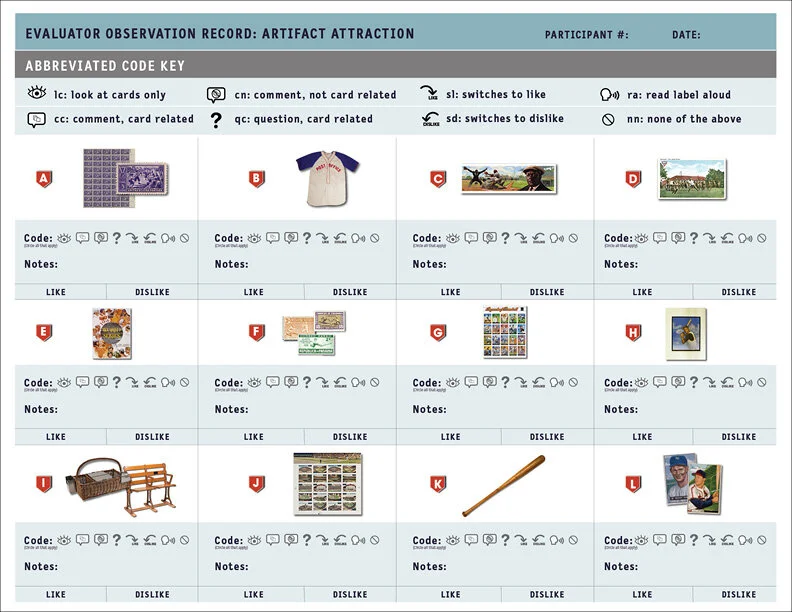

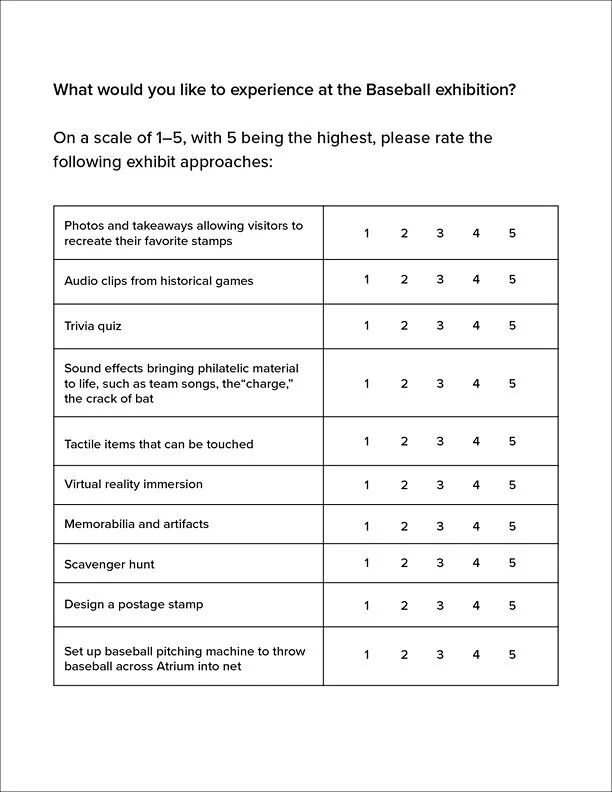
(From left to right: Evaluator observation record sheet, artifact card sample (1 of 12),
exhibition approaches questionnaire scale sheet)
The evaluation provided insight in furthering the refinement of the design and development. The evaluation revealed the favoring of interactive opportunities that engaged the entire family and have informed the development in offering more dedicated immersive and hands-on experiences. As participants formed nostalgic memories describing their associations to baseball, the need for a space to reflect and share stories was suggested. In addition, broadening perspectives of baseball was supported as participants expressed concern for the lack of representation of ethnic and gender diversity. Development of exhibitry should be based on the feedback from the visitors. It is what makes exhibitions relevant, where sharing diverse perspectives broadens the potential for diverse visitors to make personal connections to the themes and stories. The opportunity to engage in deep connective dialogue aids in creating relevance. As the forthcoming exhibition is currently under development, communication with the exhibit developers reveal the implementation of evaluation recommendations to the exhibitions. As participants expressed the lack of inclusive perspectives that broaden the story of baseball and philately, the exploration of diverse stories where baseball is a sport for all received added emphasis in the subsequent phases of the design process. The benefits of conducting this evaluation and promoting the bridging of knowledge, provide the invaluable input and feedback to improve and enrich the overall experience of the forthcoming exhibition, which aid in forming effective meaning-making.
Not only is leveraging knowledge through visitors and the extended communities able to drive relevance, but also the collaborative interchange of best practices within the field aids in fostering discovery and innovation as a whole. Digital engagement strategist, Mar Dixon, leading world trending social media campaigns such as #MuseumSelfie and #AskACurator, led the keynote address at the 2019 Visitor Experience Group (VEX) Conference and powerfully asserted the “shift from academia to a more emotive” trend in the role of the museum (Dixon, 2019). Rather than the traditional approach of passively displaying objects, the path toward a visitor centric approach was highlighted for increasing relevance. As a Diversity, Equity and Inclusion (DEI) Fellow at the VEX conference, guided by Krista Kusama, Audience Engagement Chair and Elena Bras, DEI Committee, I was offered a meaningful opportunity, fostering engagement and connection to my own practice as a designer who places the visitor at the heart of the designed experience. Through the dynamic workshops and speaker series, I had an opportunity to learn from and collaborate with an expanded network of professionals in the field, offering my perspective and instilling valuable contributions to affect a greater impact. Through empowering conversations with Anne Ishii, executive director of Philadelphia's Asian Arts Initiative (Asian Arts Initiative, n.d.), my understanding of the potential museums and cultural institutions hold as sacred spaces to bridge to varied communities inspires and challenges my belief of reinventing the future of museums and cultural institutions. Through AAI, Anne champions the advancement of “racial equity and understanding, activating artists, youth, and their communities through creative practice and dialogue grounded in the diverse Asian American experience” (Asian Arts Initiative, n.d.). Leveraging the diverse assets of communities and allowing access to become involved in the ongoing discussion makes for a relevant, dynamic cultural hub which fosters the community's sense of belonging. I believe it is vital to learn from our experiences and share personal challenges and successes; gaining and contributing to the field with an open and ready mind.
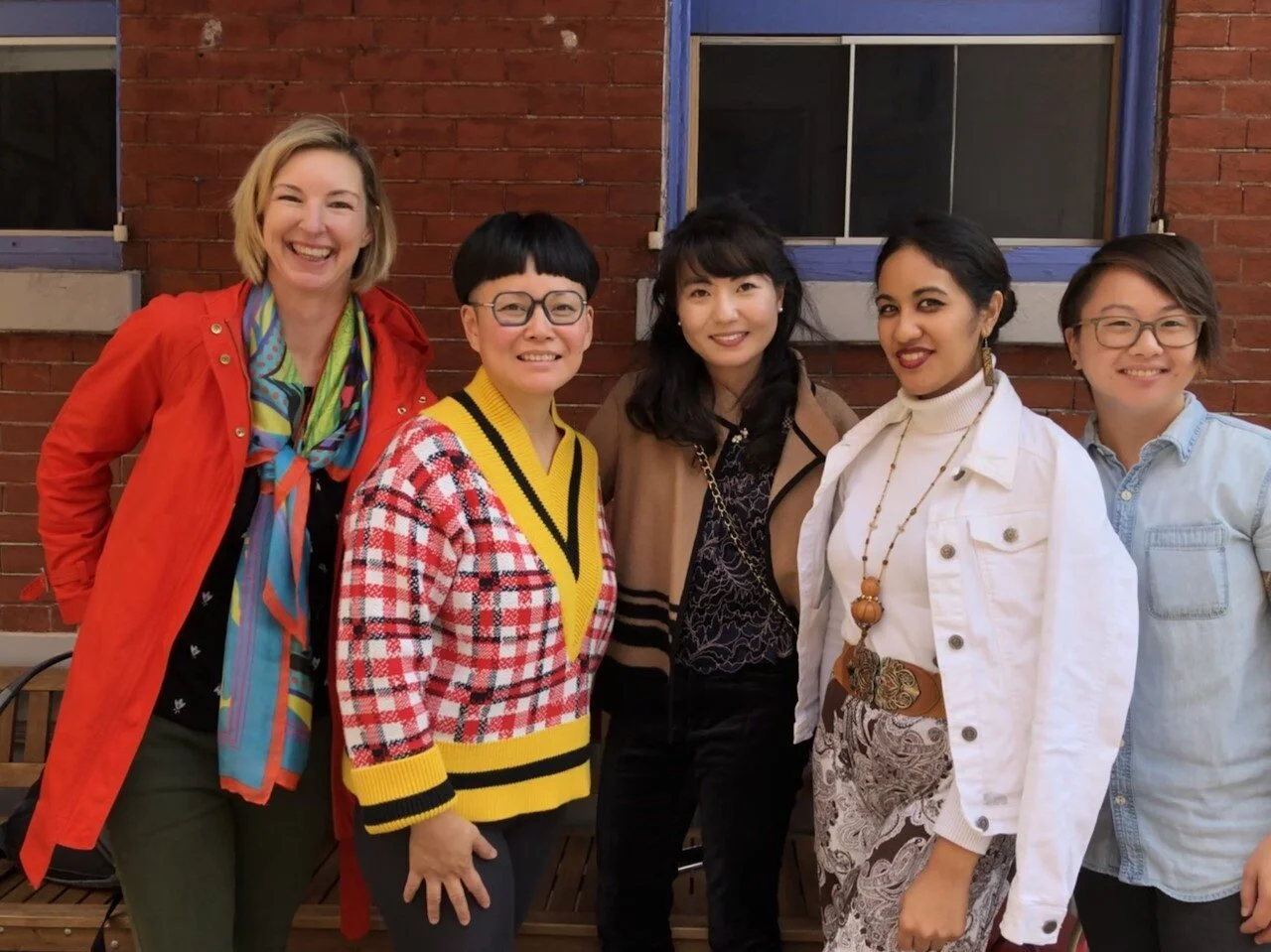
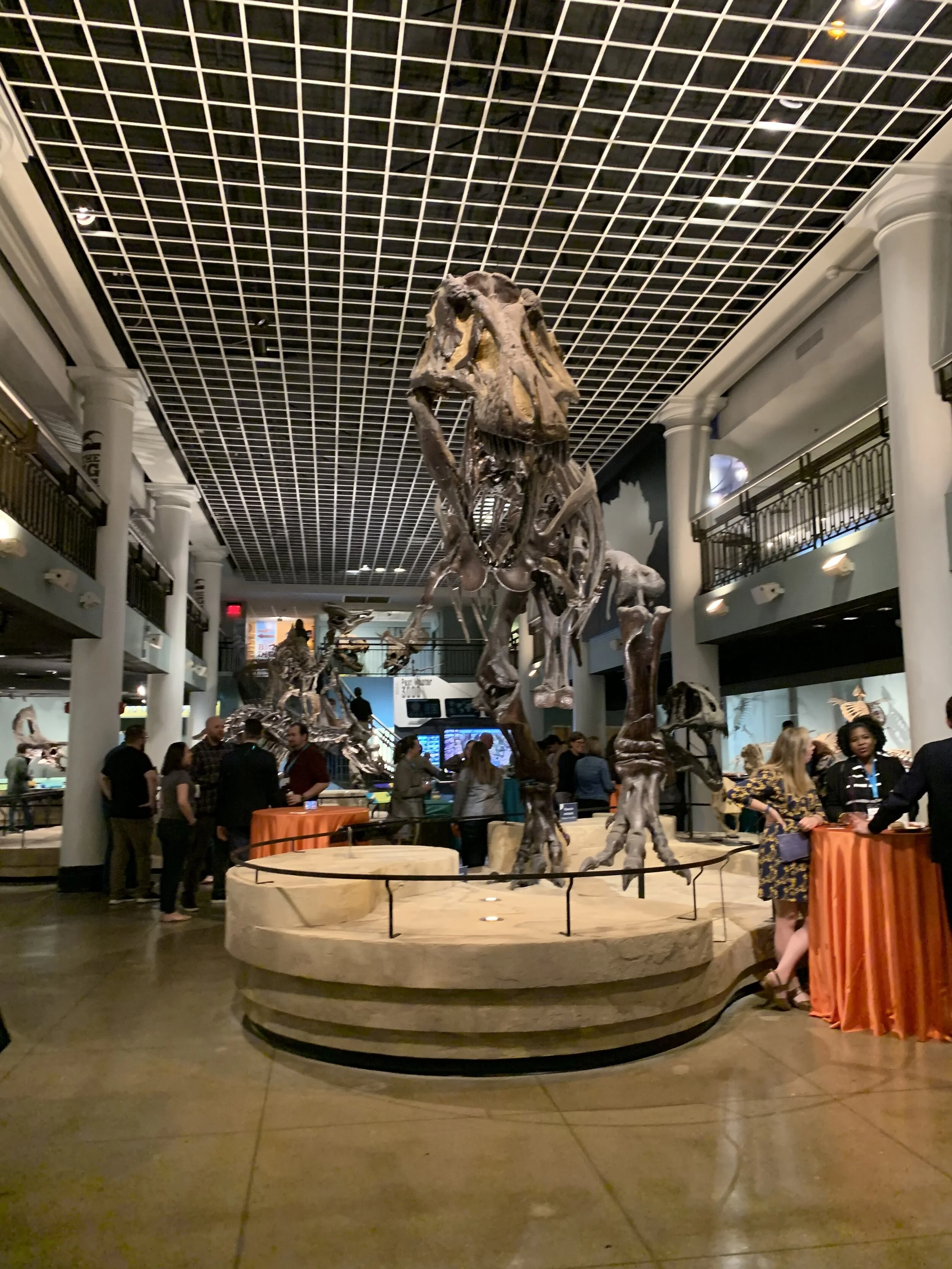
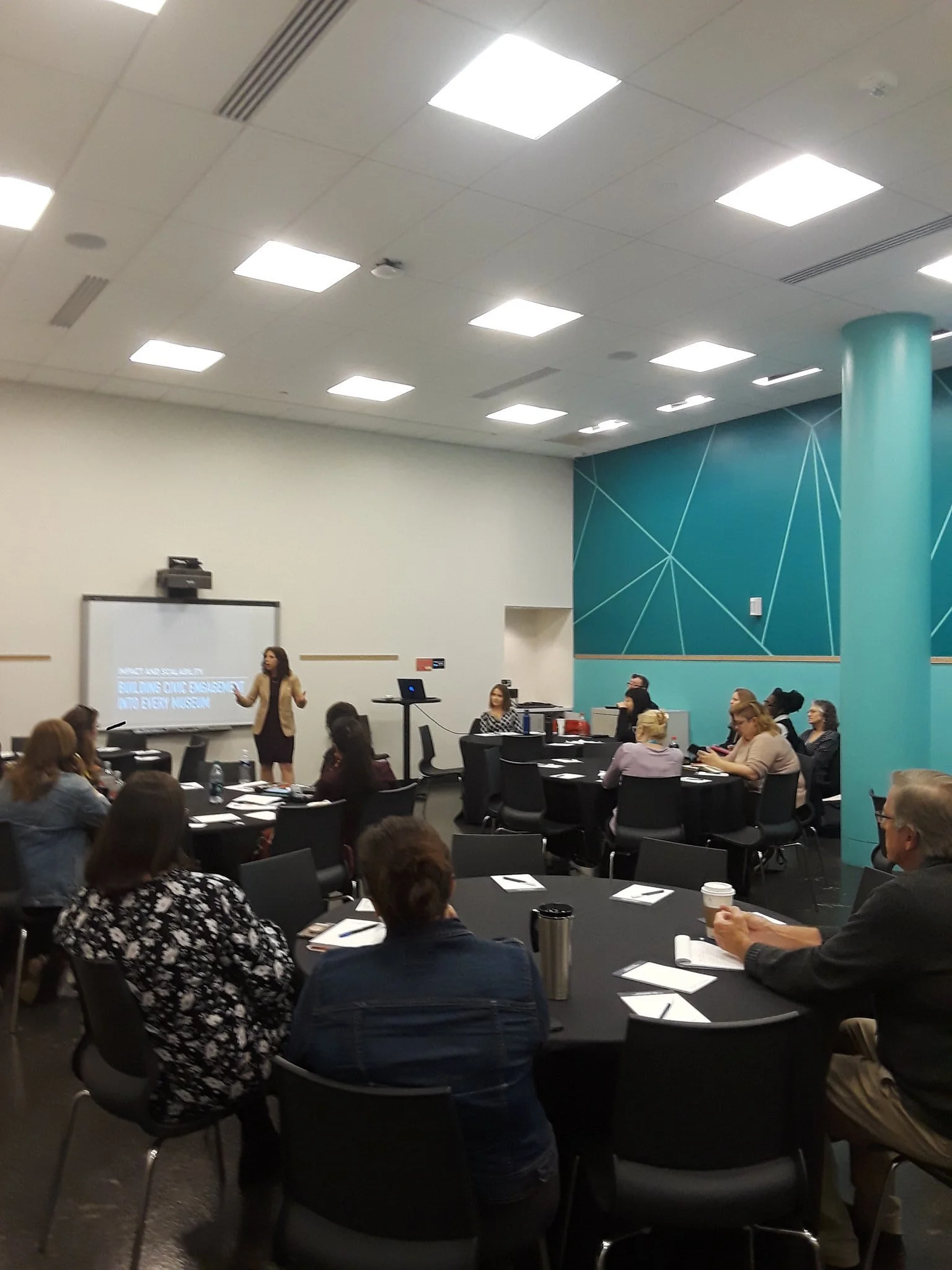
(From left to right: VEX Meet-The-Artist with Anne Ishii workshop,
VEX Welcome at the Academy of Natural Sciences, community engagement workshop at the Franklin Institute)
As a designer, I am passionately committed to broaden and enrich the holistic unification between the experience, the story, and the built environment to design receptive experiences that leverage action. These experiences cultivate my desire to design receptive experiences that invite human connection. The importance of relevance is instrumental in promoting a sustainable future. Through this article, the exploration of engaging diverse community members and visitors to learn what is personally relevant is instrumental in challenging assumptions through ongoing dialogue and evaluation, respectively. After all, the museums or institutions are created for the benefit of the people who visit them. The importance to holistically engage in cross-departmental dialogue is imperative for collective impact toward innovation. As a lifelong learner, I value critically analyzing and evaluating improvements to the future of our field. This can be achieved by being up-to-date with best practices in the field, where one would have the opportunity to learn current and emerging issues through practice, observation, and discussion with colleagues, all of which help promote for an evolving field. As Simon (2016) powerfully asserted, “I believe relevance is the key to a locked room where meaning lives. We just have to find the right keys, the right doors, and the humility and courage to open them.” Unlocking this “door” of relevance, can be accomplished through a team effort. We are all in a unique position where we hold the “key.” Each of us illuminates a different perspective that strengthens the collaborative efforts in opening the “door.” I hope that this vision inspires more authentic conversations through collaborative reflection and refinement toward sustained growth. Furthermore, encouraging interchange of diverse dialogue cultivates interdisciplinary engagement within the field to inspire a future that illuminates excitement, optimism, and relevance.
References
Asian Arts Initiative. (n.d.). Retrieved from http://asianartsinitiative.org/about/mission-history
Dixon, M. (2019, October). A Troublemaker’s Guide to Happiness. Keynote presentation at the Visitor Experience Group, Philadelphia, PA.
Downey, S. (2002). Visitor Centered Exhibition Development, The Exhibitionist.
Simon, N. (2016). The Art of Relevance. Retrieved from Artofrelevance.org